Slips and trips in the workplace are not always serious, but employers have a legal responsibility to assess potential risks and manage workplace safety.
How common are slips and trips in the workplace?
Slips and trips account for 40% of all major injuries in the workplace. And, between 20024/25 slips, trips, and falls accounted for 30% of all non-fatal injuries to employees.
Are slips and trips in the workplace serious?
A stumble may not always cause serious harm, but there is always a risk.
In a past case study, a 16-year-old girl slipped on water leaking from an ice machine. She instinctively put her arm out, but she put it in a deep fat fryer, causing severe burns.
Accidents at work are also costly. The estimated economic cost of workplace injuries between 2023/34 totalled £6.5 billion.
In what sectors do slips and trips occur most often?
Slips, trips, and falls can occur in any workplace in any industry.
Falls in catering can occur due to poor lighting, spills, leaks from pans, drinks, and ice machines, or fallen food. It can be particularly dangerous in the catering industry, as employees may be carrying knives, hot food and drinks, and glass items that can break.
Falls can also occur in retail spaces due to items left on the floor.
What causes slips, trips, and falls?
- Spills and leaks
- Poor lighting
- Damaged/uneven flooring
- Trailing cables
- Weather conditions (such as ice, snow, and rain)
- Obstacles
- Contaminated floors (i.e., from dust, mud, food)
- Slippery flooring
- Loose mats/floor coverings
- Poor housekeeping (i.e., items and equipment in the middle of pathways)
The impact of slips and trips
- Injury: sprains, fractures, head trauma, and nerve damage.
- Lost Productivity: Staff may need to take time off due to injury, or they may be unable to complete their usual task.
- Legal costs: Employees may ask for compensation.
- Insurance implications: Premiums can increase after a workplace incident.
- Reputational damage: Industries can be poorly viewed if state regulations and concerns are not met adequately.
- Financial impact: Employees can lose money, either in pay due to necessary time off or legal costs.
Laws and Regulations
Health and Safety at Work Act (1975): Employers must protect the health, safety, and welfare of any persons at work or “in connection with the activities of persons at work”.
The Management of Health and Safety at Work Regulations Act (1999): Employers are required to assess any possible risks in the workplace and, where necessary, take any preventive and protective measures.
How to prevent slips, trips, and falls in the workplace
- Employers should carry out regular risk assessments to identify any possible dangers.
- Provide training/resources to employees, advising them on how to spot possible hazards and the necessary steps to take if they see a risk.
- Alert others immediately to any potential risks.
- Do not leave spills unattended.
- Ensure any contaminated flooring is cleaned swiftly and efficiently.
- Use warning/wet floor signs.
- Repair any machinery/equipment that can cause a potential risk (i.e., a leaking machine).
- Clean during quiet hours.
- Repair any building damages (such as leaks and damaged flooring).
- Remove any obstructions in walkways.
- Keep the flooring clear.
- Invest in slip/floor mats in high-risk areas, such as doorways.
How NWR Hygiene can help
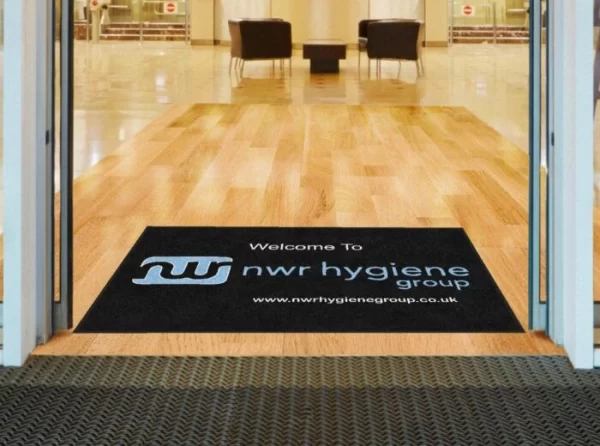
Protecting staff, clients, or customers is your number one priority, so it’s our priority too. We offer scraper and dust control mats that catch dirt and water at the door, preventing the spread of potential contaminants through your premises and minimising the risk of slips. They are strong, sturdy, and thick so that they will stay safely and firmly in place. The mats can also be branded – the perfect stylish and safe solution.
Contact us now to find your stylish and safe solution to slipping hazards.