In recent years, we’ve seen positive changes taking place in facilities management as public toilets have become increasingly more inclusive. From gender-neutral toilet areas and baby changing units to fully equipped disabled toilets, building managers are increasingly recognising that public and workplace facilities must cater to the real health needs of every visitor and employee. However, one significant area of bathroom provision continues to lag behind.
Dedicated hygiene and disposal support for men experiencing incontinence continues to remain rare across the country. Despite the fact that so many individuals struggle with this health condition, public toilets are still not up to date with their needs and do not account for this when designing and equipping their facilities.
Including dedicated incontinence disposal methods in male public spaces should be more than an option for facilities management. In this blog, we’ve discussed the importance of preparing your facilities for incontinence sufferers, male incontinence products that are being used to support these individuals, and why taking a modern approach to male hygiene is an important step to take for your organisation’s Corporate Social Responsibility (CSR) and accessibility.
Why male incontinence happens
Because male incontinence generally isn’t openly discussed, it is far more prevalent than facility managers and business owners realise. Understanding the underlying health triggers behind bladder and bowel leakage helps highlight why providing dedicated infrastructure is a necessary standard of care.
The scale of male incontinence
In the UK, over two million men experience some form of urinary or bowel incontinence. This roughly equates to one in twenty men overall and up to one in ten men over the age of 60.
Despite the growing awareness, incontinence is still a stigmatised medical condition that men can experience with embarrassment and reluctance to seek help. This silence often leaves many feeling isolated and makes everyday activities a source of anxiety.
Medical triggers of incontinence
Incontinence is an involuntary physical health issue rather than simply a byproduct of old age. A wide range of health conditions and medical interventions can disrupt normal bladder control. Medical causes of male incontinence include:
- Prostate issues like enlarged prostate (BPH) or surgery in the area
- Long-term conditions like diabetes or heart conditions
- Nervous system conditions such as stroke recovery, Parkinson’s disease, Multiple Sclerosis (MS), or spinal injuries
- The natural loss of pelvic floor muscle strength due to natural ageing
Managing a medical condition or recovering from surgery should never limit a man’s freedom to go about his daily life. Providing supportive, accessible washroom facilities ensures that men recovering from or living with these conditions can move through public spaces and workplaces comfortably and with confidence.
Maintaining independence
Just because an individual has suffered from any of the above and/or struggles with male incontinence shouldn’t mean that they don’t feel comfortable going to work or leaving the house.
When commercial facilities lack dedicated, private disposal units in male cubicles, it creates unnecessary barriers to mobility and independence.
Incontinence products on the market
There are several incontinence products out there to support men dealing with incontinence difficulties. They are designed with discretion and comfort in mind and support men in regaining their confidence and independence in public spaces.
Incontinence pads and guards
These are V-shaped, absorbent liners with self-adhesive strips. They fit inside standard brief-style underwear and are able to catch light to moderate leaks.
Absorbent protective underwear
This product is a full pull-up style of protective underwear that features high-capacity absorbent cores. This underwear can also completely withhold odours and has elasticated leg cuffs for moderate to heavy leakage.
Drip collectors and sheaths
These comfortable and compact soft pouch sleeves are designed specifically for men experiencing post-micturition dribble or continuous and light leaks.
Catheters and stoma care consumables
This category consists of urine collection leg bags, night drainage bags, sheath catheters, and specialised sterile cleansing wipes that are perfect for long-term urological conditions.
The facilities management perspective
While manufacturing advancements have made personal incontinence products more discreet, comfortable, and absorbent than ever, these solutions only solve half the equation for male users. From a facilities management perspective, an individual’s care routine inevitably breaks down if a commercial venue fails toprovide a matching infrastructure for disposal.
Expecting users to rely on improvised alternatives creates unnecessary embarrassment and compromises hygiene standards across the entire facility.
To support men in public spaces, businesses can invest in:
- Dedicated commercial male incontinence bins
- Antimicrobial and odour-controlled bin liners
- Hand and surface hygiene solutions
- Washroom air fresheners and diffusers
These products are hygienic and considerate, respecting the needs of all different types of visitor or employee.
Why these products are important in commercial settings
There are plenty of options for men looking to source these products and thanks to their thoughtful design, they can be discreetly worn both at home and in public environments. However, an unfortunate dilemma occurs too often, where men need to dispose of or change their used product, but there are no appropriate public means by which to do so.
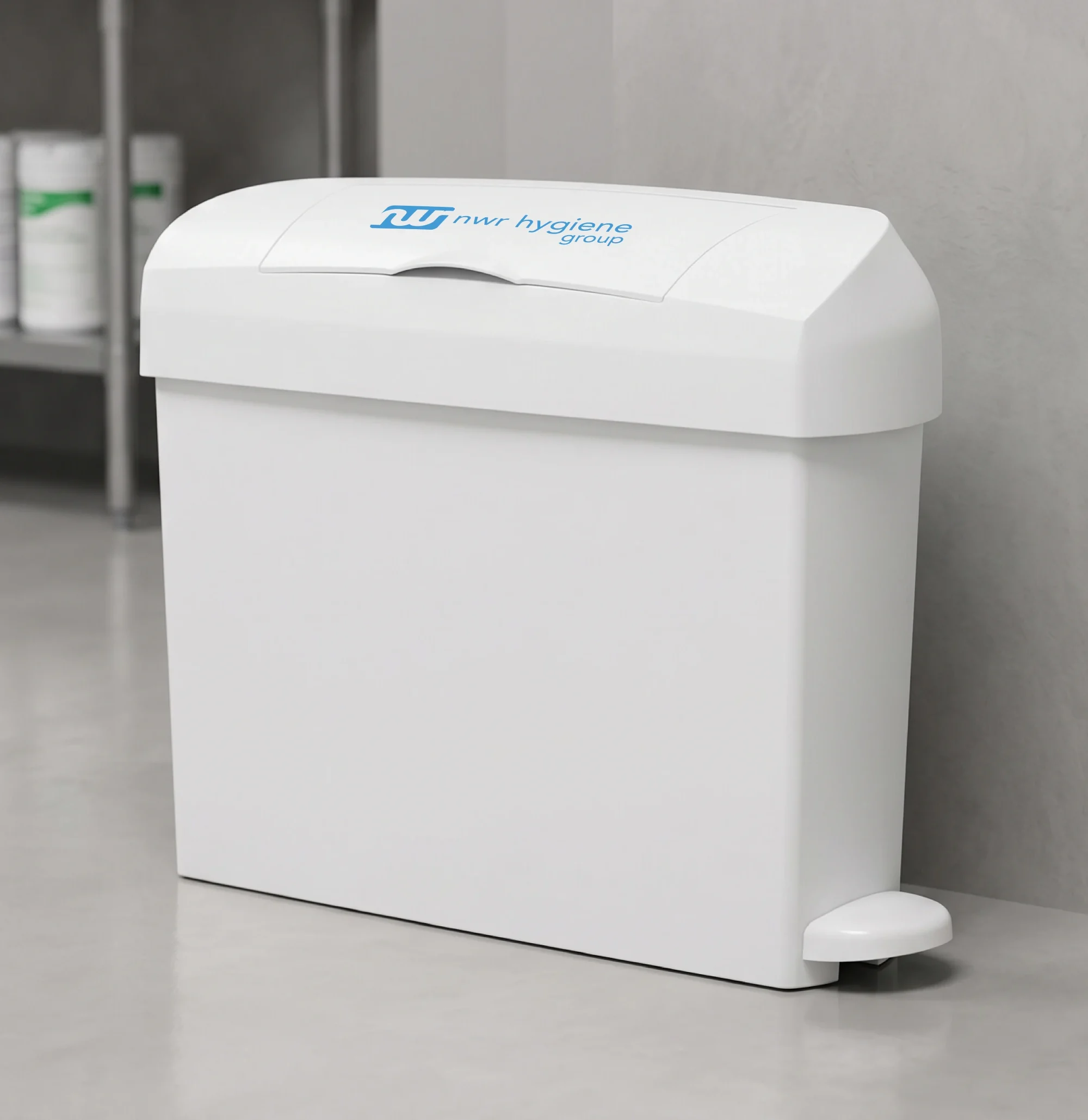
These individuals are then forced to attempt a discreet removal by wrapping items in toilet paper and carrying it to the nearest public bin or even resorting to carrying waste home in plastic bags. Alternatively, these individuals will seek out disabled toilets that are required to come with bins, creating a knock-on problem for disabled people, who may be made to wait longer for accessible facilities or find themselves unable to access the specialised amenities they rely on when they need them most.
Protecting dignity
The constant worry of being caught with nowhere to dispose of personal hygiene items can cause feelings of anxiety. Often, all it takes is placing a bin within each cubicle of an organisation’s toilets to restore privacy and confidence and allow men to handle their personal hygiene without the stress.
Infection control
Used pads and other products are not the sort of waste that should be dropped in open top bins. Used incontinence products are a type of biological waste. Dropped in open top bins, they create contamination risks and are much more able to spread bacteria and bad odours. A dedicated sealed container in each cubicle is all that is needed to immediately solve the disposal problem with these products.
Pipe damage
On a more practical level, businesses put themselves at a much higher risk of plumbing blockages when they don’t provide a solution to incontinence waste in their toilets. Sometimes in moments of panic, men will attemptto flush their used products, causing blockages and overflowing toilets. This can become an expensive reoccurrence, despite the cheaper alternative being a feasible option for any business with facilities.
How NWR can help
Businesses treating male waste disposal solutions as an optional extra are falling behind when it comes to modern washroom standards. Supporting the large group of people dealing with this sensitive condition means looking beyond personal care items and focusing on providing the means for people to dispose of them. In the interest of protecting dignity and keeping public spaces hygienic, disposal solutions and male incontinence products must become a standard feature in male cubicles across all commercial facilities.
At NWR Hygiene, we are committed to helping commercial venues, offices, leisure facilities, and public sites modernise their approach to facilities management. Our dedicated commercial incontinence bins are designed specifically for male washroom cubicles, featuring ergonomic design and hands-free operation. We provide and install these discreet toilet features to support businesses with odour and germ control and protect their plumbing from clogged waste.
Don’t be the business that falls behind when supporting incontinence sufferers is an easy adjustment to make. Take a proactive step towards public toilet equality by contacting our helpful team or take a look at our Washroom Services information to request a free quote today.